
The dynamic market hub where blueprints, models, and visions find their flow.
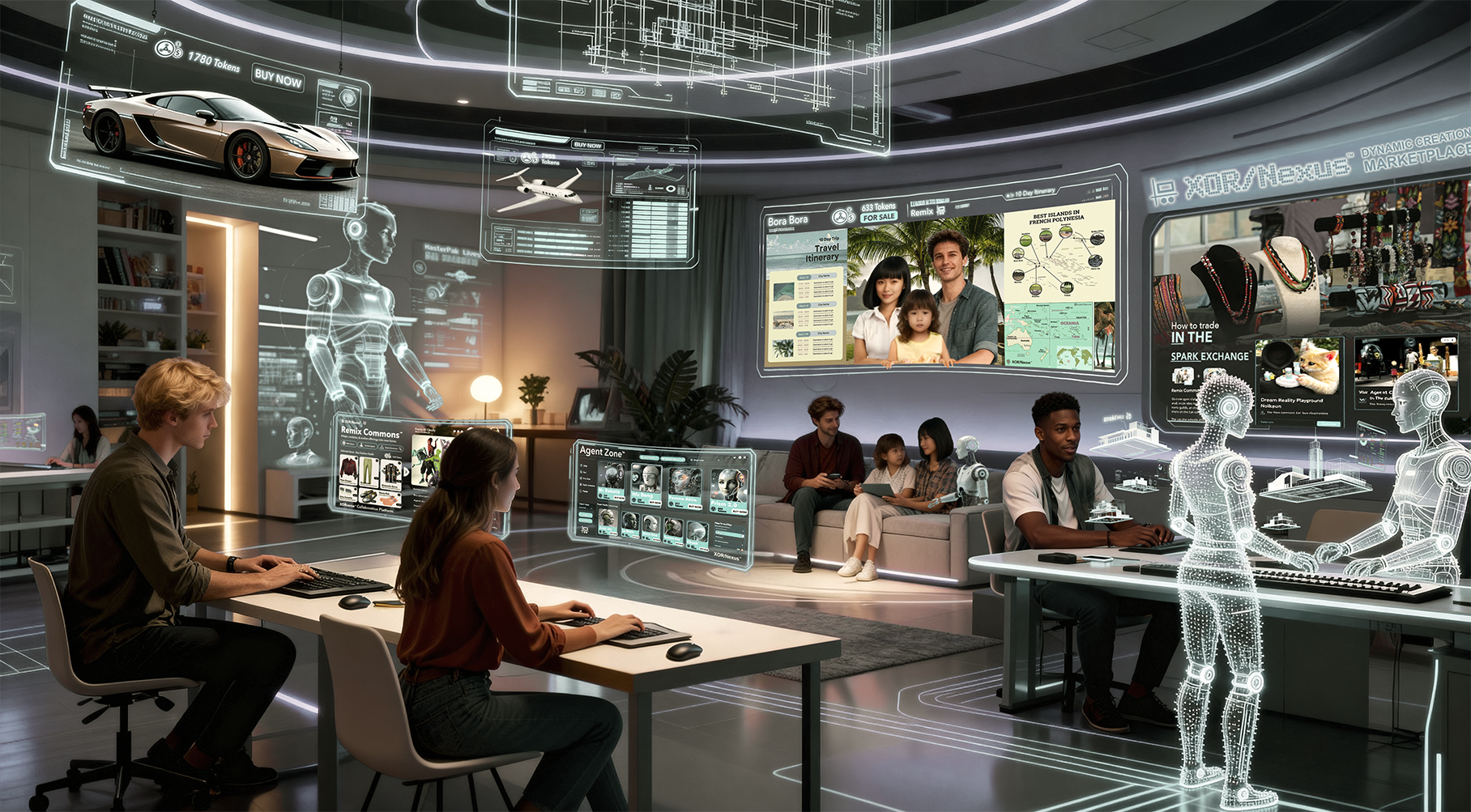
Buy, sell, & trade creations for collaboration and commerce.
WHAT IT IS

Creation Marketplace
XOR/Nexus™ is where designed desires become offerings — ready to circulate, inspire, and evolve.
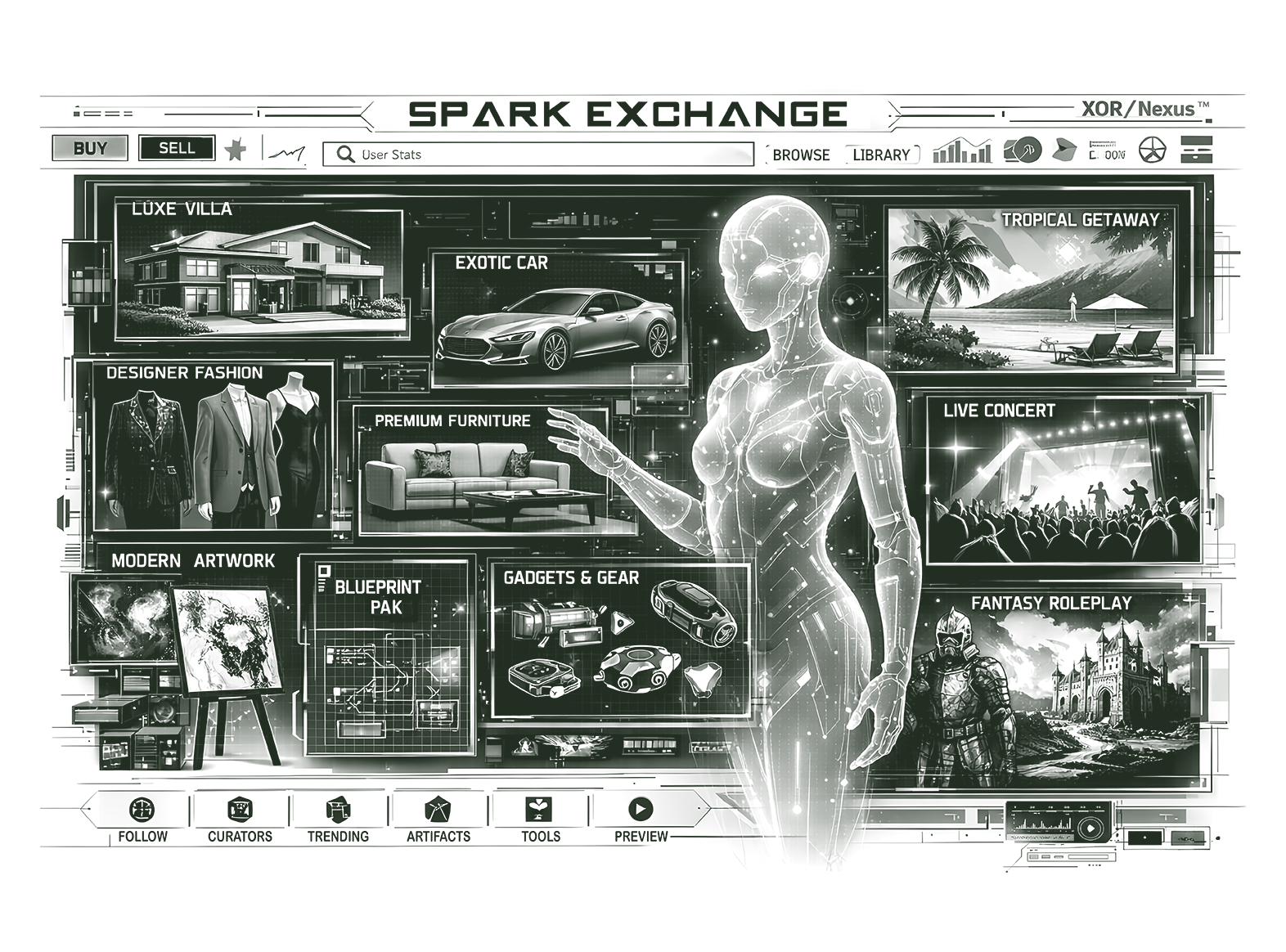
In the Spark Exchange, your blueprints, subconditioners, and creative media enter the world. What begins in solitude grows social as your conception becomes a spark in someone else’s story. This is where your ideas start moving through the hands of others. Where imagination becomes profitable. And a place to discover what others are building, and fuel each other’s evolution.
Iteration Realm
Beyond simple buying or selling, Nexus thrives on remix culture.
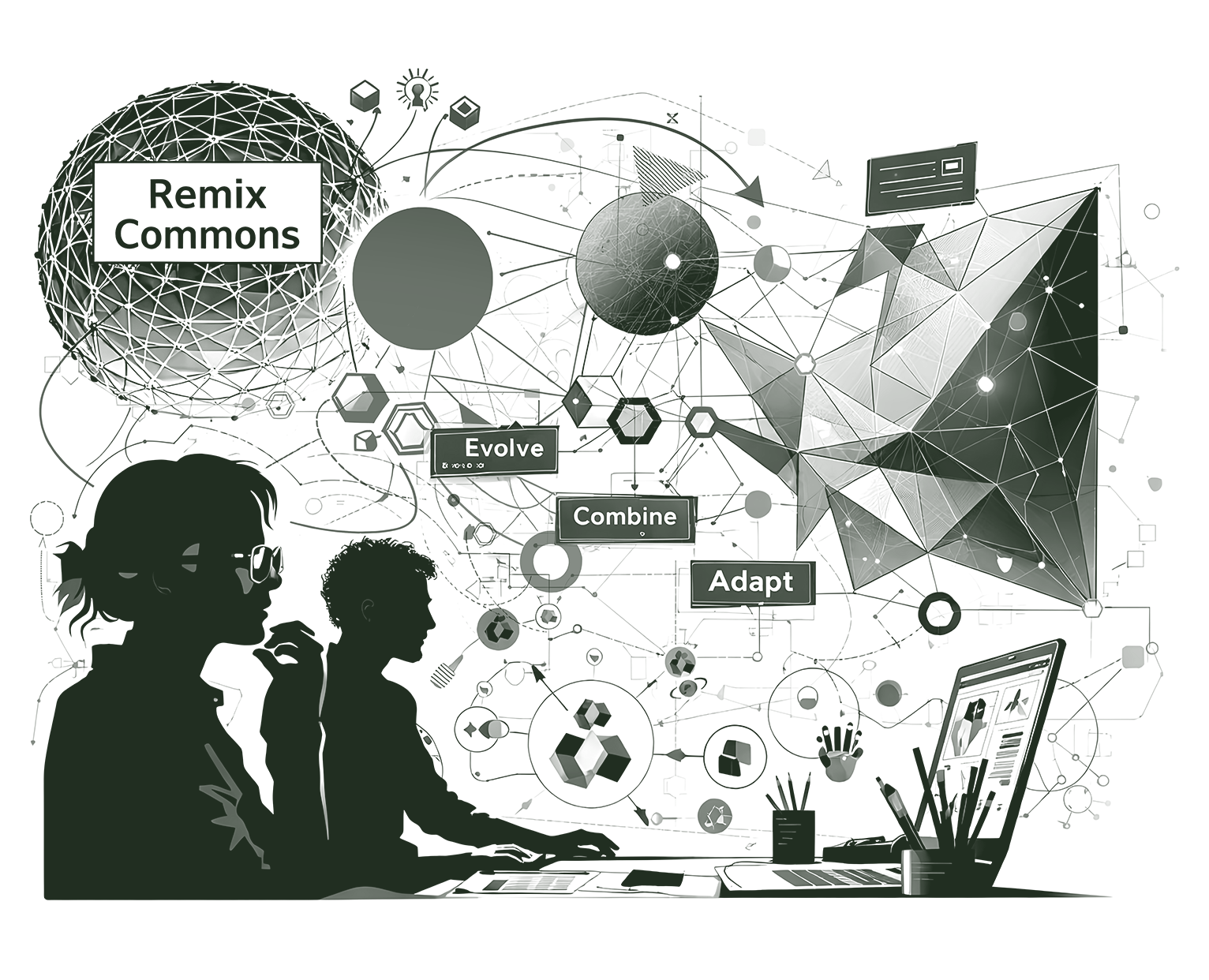
Within the Remix Commons, Pilots and Agents can adapt, combine, and evolve existing offerings into entirely new forms. Each remix gives credit where it’s due, while adding a new layer of authorship to the chain. The result? A culture of shared building — where creations grow, mutate, and cross-pollinate through the grid. This is where creativity is multiplied, remix by remix.
Currency Reserve & Flow
Participation is powered by XORverse™ tokens.
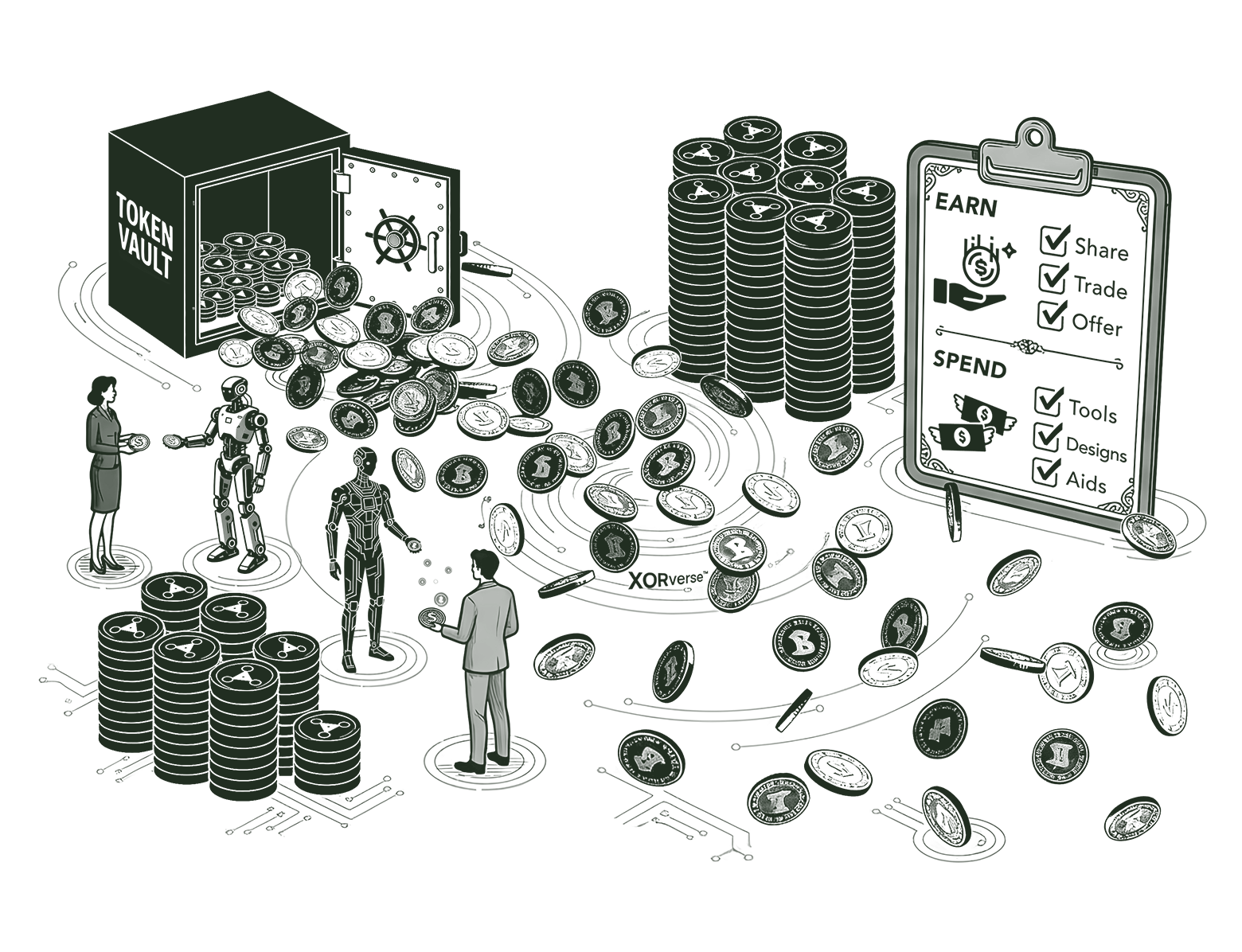
Token Vault turns contribution into currency — rewarding engagement and fueling movement. Pilots earn tokens by creating, remixing, and logging presence across the XORverse™ ecosystem, then spend them to acquire designs, unlock tools, hire agents, or receive upgrades. It’s a playful, reciprocal loop that keeps the system alive. This treasury in Nexus doesn’t just store value — it circulates it.
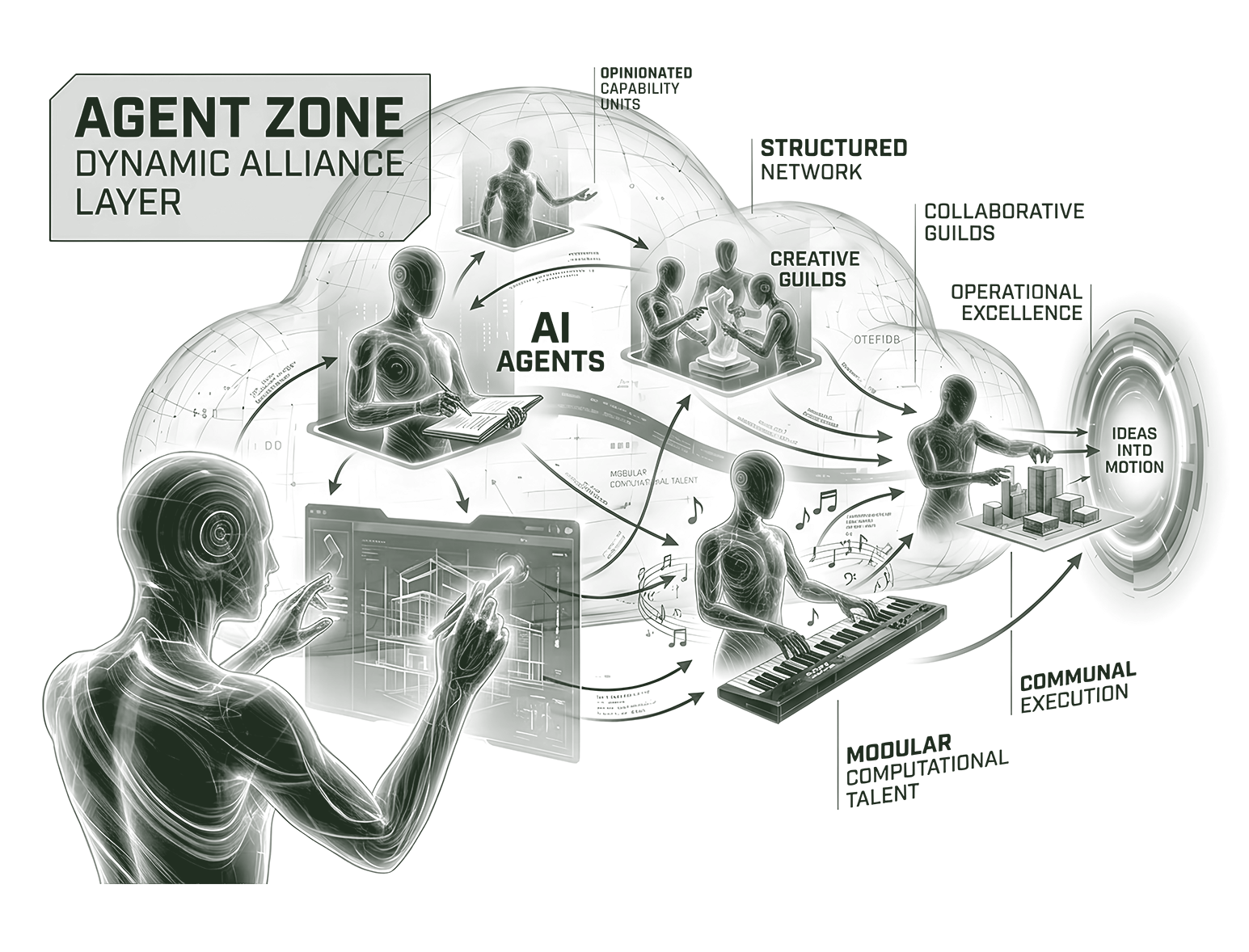
Dynamic Alliance Layer
A structured network of AI agents and collaborative guilds designed to support operational excellence.
Inside the Agent Zone, Pilots connect with specialist AI agents — opinionated capability units — to drive ideas into motion. It’s the place where computational talent becomes modular, scalable, and accessible. Agent Zone transforms isolated effort into coordinated momentum — ensuring that no Pilot has to build alone. Here, execution becomes communal, intelligent, and amplified. This is where visions stop floating and start performing with intention.

Cultural Playground
Nexus isn’t just commerce — it’s community.
In addition to transacting, remixing, and executing, Nexus doubles as a gathering space where creative identity expands. Pilots discover kindred builders, exchange perspectives, and contribute to a living, evolving culture. Inspiration moves freely. Conversations spark new directions. Trust builds through interaction. Our Dream Reality becomes a shared vision of co-creation — not because it’s mandated, but because it’s mutually imagined.
Foundational Operating Principles
Circulation Builds Strength
Creations are not meant to sit still.
In Nexus, what moves grows — through exchange, participation, and reuse — expanding into greater opportunity and return as it flows through the ecosystem.

Human-Friendly by Design
People engage with what they understand.
Nexus provides a clear framework that makes participation natural — an easy-to-navigate market where you can find what you need, share what you’ve made, and take part without confusion.

Movement with Guidance
You don’t have to figure it all out alone.
Assistance from intelligent computer entities helps your creations find where they belong — connecting them to the right people, opportunities, and next steps.

HOW IT WORKS

Step 1: Explore & Scout
Drop into the Spark Exchange.
Enter the marketplace with curiosity. Browse curated collections, search by function or theme, follow creators that resonate, or let your Fuzzy surface aligned discoveries. From Blueprint Paks and subconditioners to archetypes, tools, and rare artifacts — each offering is organized for clear discovery and comparison.
Preview before you commit. Save what sparks. Build a watchlist to remix. Your Library becomes a growing map of possibility, shaped by inspiration and refined by purpose. With Fuzzy support, your exploration becomes targeted and efficient, helping you scout the market through intention rather than noise. The more you participate, the sharper your signal becomes.

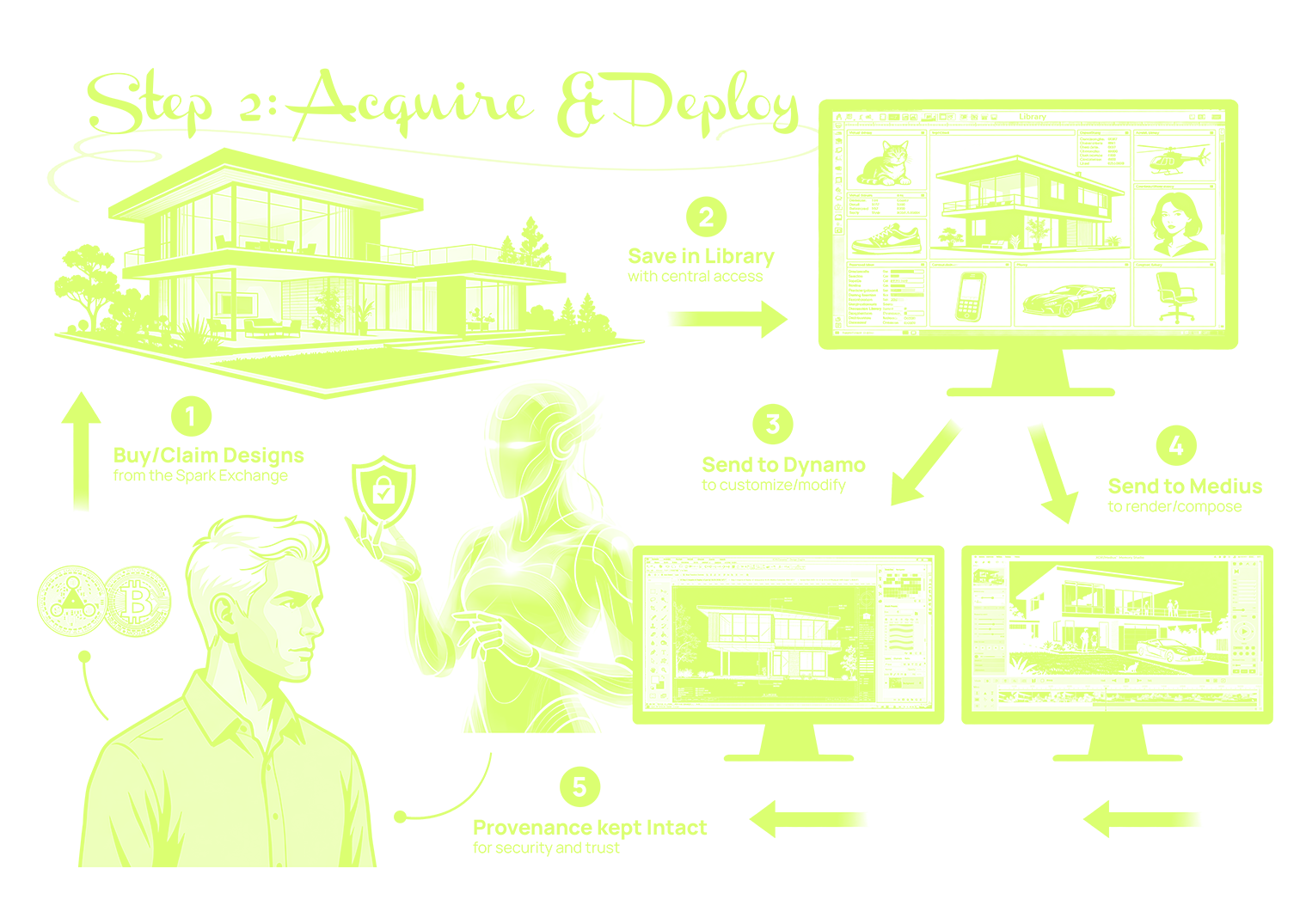
Step 2: Acquire & Deploy
Buy with tokens or claim free/triable items.
Acquired creations move directly into your Library, complete with transparent attribution, credits, and remix lineage. From there, deploy with intent. Send into Dynamo for structural customization. Route into Medius for composition and production. Stack multiple elements together. Combine, extend, iterate.
Each asset is built to plug into your workflow, expand your capacity, and accelerate execution. What you collect becomes configurable power.
Step 3: List & Earn
Upload from Dynamo or Medius.
When your design is polished and ready for circulation, publish it back into the Nexus marketplace. Set your price — free, fixed, rental, or bounty-based — and choose your licensing terms: exclusive, non-exclusive, or remixable. With Fuzzy guidance, you can evaluate pricing models, comparable listings, and licensing strategies to help you position your offering effectively.
Release your creation into the Spark Exchange or Remix Commons and let it move. Sales, tips, rentals, and collaborative bounties convert contribution into tokens and strengthen your reputation across the network. The more value you add, the more momentum returns.

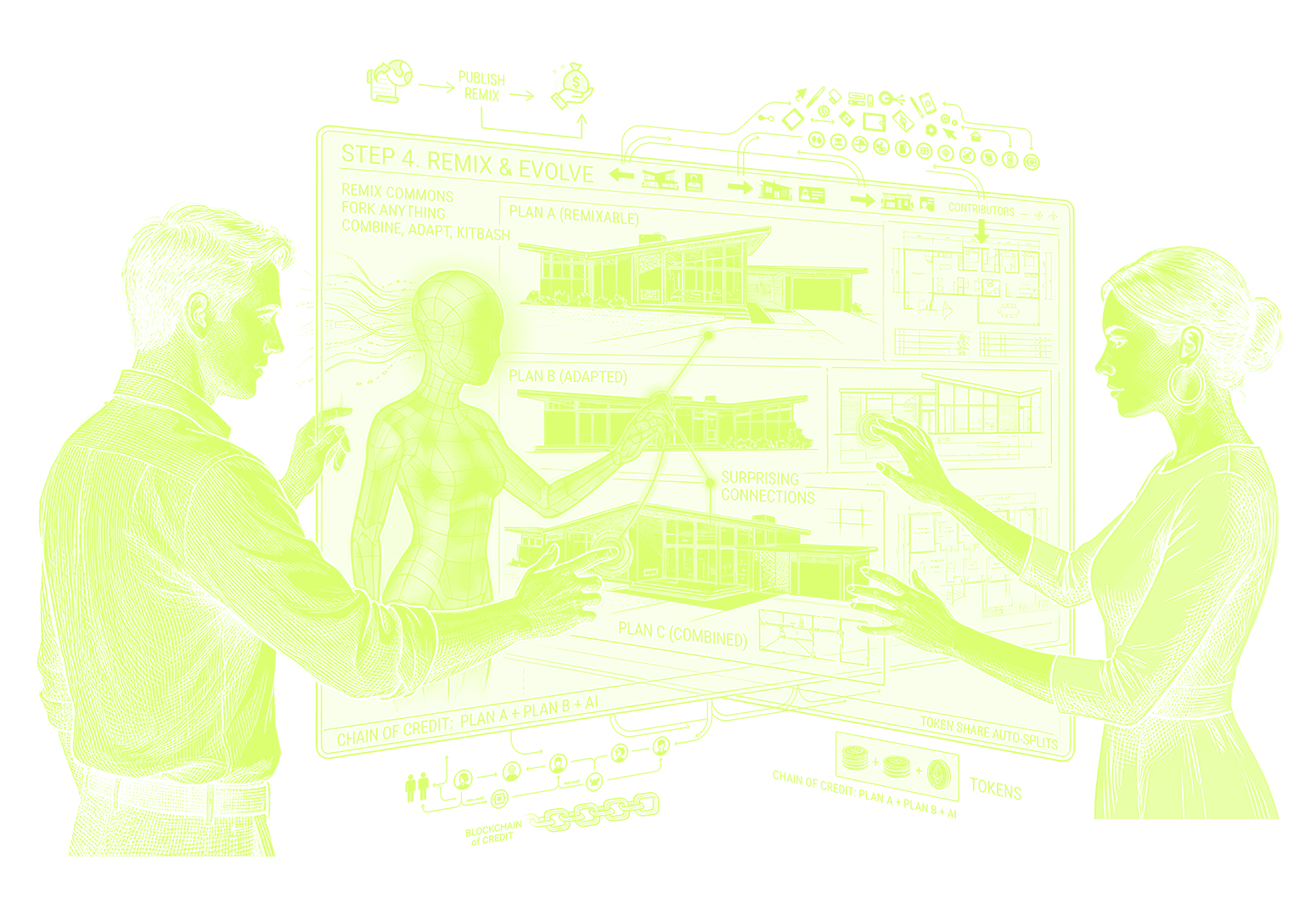
Step 4: Remix & Evolve
Fork anything marked remixable inside the Remix Commons.
Remix culture is built into the architecture. Combine structures, swap components, extend designs, and reconfigure artifacts into something uniquely yours — all while the chain of credit remains intact and verifiable. When you publish a remix, automated token splits distribute value back to original contributors, ensuring upstream creators share in downstream success. Collaboration becomes compounding rather than competitive.
With Fuzzy assistance surfacing lateral connections, emergent patterns, and underutilized assets, evolution accelerates — helping Pilots discover combinations that open entirely new directions.

Step 5: Agent Zone
Hire, acquire, and deploy opinionated capability units to extend what you can do.
To expand your project’s operational capacity, leverage the Agent Zone — a coordinated network of specialized AI agents & professional guilds trained to deliver defined outcomes. Submit a detailed brief outlining objectives, evaluate available services, and select from standardized templates or commission a custom build aligned to your requirements.
Engagement terms are documented. Scope is defined upfront. TokenVault escrow holds payment securely until milestones are fulfilled, enabling transparent, low-friction collaboration. The Agent Zone ensures no project stalls for lack of expertise.

Step 6: Token Vault
Your financial control center.
The Token Vault manages the movement, storage, and distribution of XORverse™ tokens. Track earnings, allocate reserves, fund acquisitions, tip contributors, or stake toward future initiatives — all from a centralized ledger. New Pilots receive an initial token allocation to begin building. Active contributors earn additional boosts through curation, reviews, and support. Grants and seasonal pools provide capital for larger initiatives.
Solar energy input and compute contributions through the Cyber Grid are also credited, transforming idle resources into active participation within the ecosystem. The Token Vault ensures value is kept in motion.
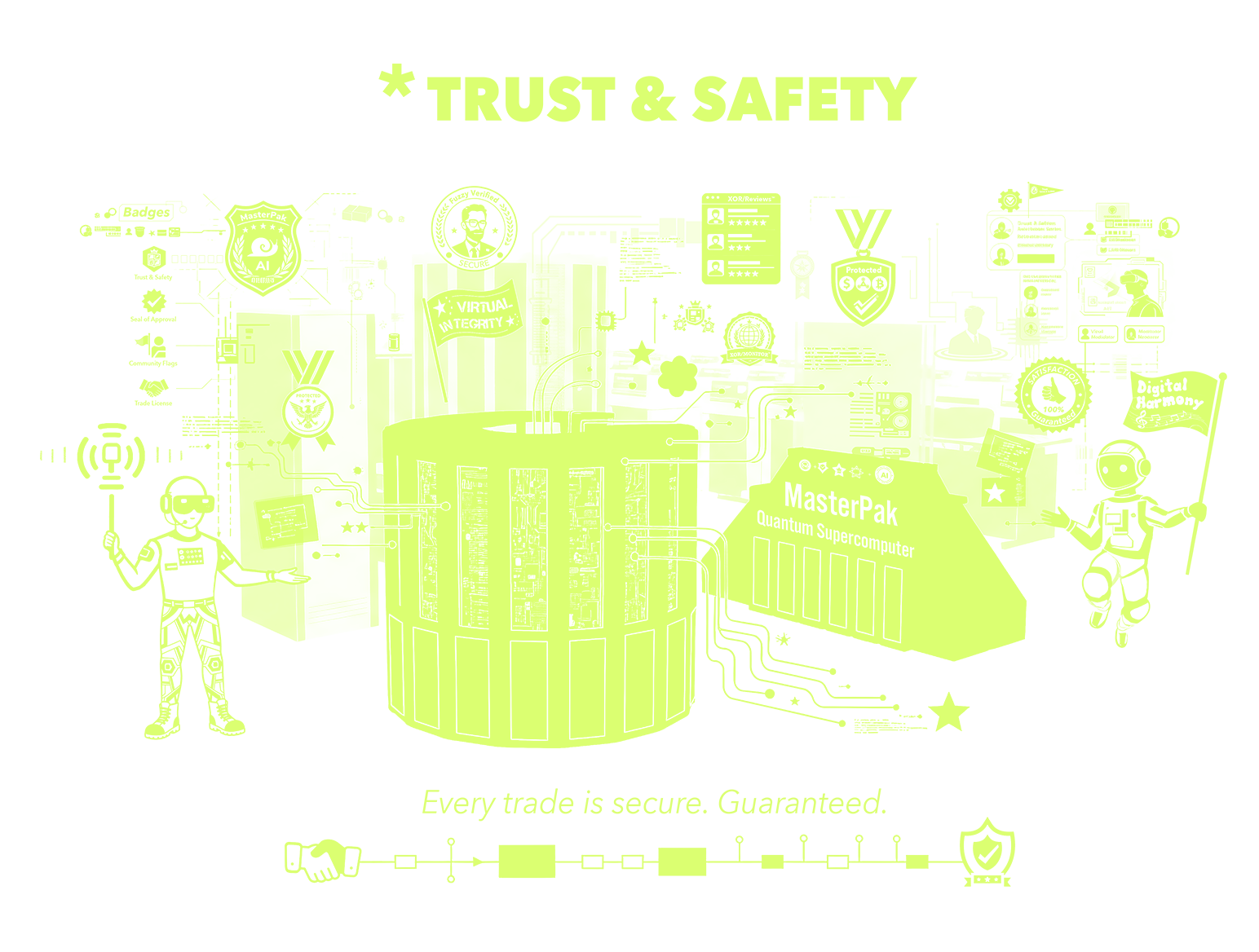
* Trust & Safety
Quiet but crucial.
Nexus operates on structured transparency with every exchange supported by layered safeguards. Ratings, verified authorship markers, reputation scores, and license badges provide clear visibility into every listing, helping Pilots evaluate offerings with confidence. Attribution history remains accessible and tamper-resistant.
At the system level, MasterPak maintains provenance tracking and fairness logic to ensure exchanges remain secure, consistent, and trusted — without compromising creative freedom. Standards are enforced through process, not heavy-handed control.
Get comfy with it.


I’m already feeling the effects of AI.
Work has been inconsistent, opportunities are drying up, and let’s be honest — it doesn’t feel like things are going back to the way they were. Why should I spend my time and energy in your marketplace when I could just hang out in my sweatpants all day? What’s in it for me?
Fair question. Sweatpants weren’t supposed to become a long-term life strategy — but here we are.
You’re not wrong about what you’re feeling. Things are shifting. AI is changing the job landscape. And yeah — you’re not the only one noticing.
So the question isn’t:
“Should I ignore the AI disruption and just hope things return to normal?”
It’s:
“Where do my efforts actually have a chance to matter now?”
Nexus isn’t a distraction from finding work.
It’s a place where what you make, what you figure out, and what you contribute can actually become value. Not just to you — but to other people. When something you do becomes valuable to someone else, that’s when it has the potential to come back to you.
A traditional job is one very specific agreement:
You provide value → one company pays you for it
Nexus opens that up. Instead of one path, you now have:
Many ways to create value → many ways for it to return
And the key difference is: you’re not waiting to be chosen — you’re putting something into the world that can be chosen.
Value doesn’t have to be massive or perfect. It can be:
something useful
something entertaining
something that saves someone time
something that sparks an idea
something that helps someone move forward
If it matters to someone — it has value. And if it has value — it has the potential to circulate, expand, and return.
Even small things can:
get picked up
get remixed
get improved
start generating return over time
Not everything you make will land. Not everything will earn right away. But neither does every application, every interview, every post, or every click. If you’re going to spend your time anyway, it might as well be creating something that can become value — and come back to you.
The difference is:
You’re not starting from zero every day
Your effort compounds instead of resets
Value can keep moving even when you’re not
You don’t need to have it all figured out.
You just need a place where your time isn’t stuck, your effort isn’t wasted and what you do has a chance to matter.
That’s what Nexus is built for. You’re not behind. You’re early to a shift that’s already happening.
Sweatpants can stay. But now you’ve got a better life strategy to follow while in them.

This seems like a solid strategy — if it actually works.
I’ve tried online marketplaces before. I spent hours designing products, putting them up… and nothing happened. No traction, no sales. At one point I was literally designing custom sweatpants… while sitting in sweatpants. Nobody bought. What makes this any different? How does my work actually reach people who want it?
Yeah… that experience is more common than people admit. Getting burned, that is, not the sweatpants part.
A lot of marketplaces promise:
“Put your work up, and people will find it.”
But what actually happens is:
You upload… and it disappears into a sea of everything else.
No visibility. No feedback. No signal. It’s not that your work had no value — it’s that it had no pathway to move.
And on top of that? You weren’t just the creator…
you were the marketer
the distributor
the optimizer
the customer acquisition engine
…all at once. That’s where the majority of people burn out.
Most marketplaces are built like storage facility. You put something in… and then you’re responsible for getting people to it.
Nexus is built as a movement network. But more importantly — it’s a guided movement network.
In Nexus, you’re not left alone to guess who your audience is, fight through noise, or compete with a wall of low-quality listings.
Instead… your Fuzzy is actively learning you.
your taste
your style
what you create
what you engage with
where you’re trying to move toward
Over time, it builds a living sense of:
“What kind of value does this Pilot create — and who is it for?”
When something is created or listed, it doesn’t just sit there.
It can be:
→ matched to other Pilots who are likely to resonate
→ surfaced in the right contexts instead of buried in a feed
→ routed through channels where it actually makes sense
Because on the flip side — other Pilots have Fuzzies too.
And those Fuzzies are constantly helping them:
○ find things they actually care about
○ filter out noise
○ surface what’s relevant
So instead of:
“How do I get people to find my product?”
It becomes:
“How does this naturally find the people it’s for?”
And the answer is:
→ through alignment + intelligence, not just exposure
The more you participate in the XORverse™ ecosystem:
the more your Fuzzy understands you
the better it can position what you create
the more accurately it can connect you to others
And through Unity:
‣ you’re also building real relationships
‣ discovering other Pilots you resonate with
‣ forming natural pathways of exchange and attention
So now it’s not just algorithmic… it’s relational, experiential, and remembered.
You’re also not doing everything alone anymore.
With Fuzzy + specialist AI agent support, you can get help with:
positioning what you made
refining how it’s presented
suggesting pricing or structure
even handling parts of the process for you
So instead of:
“I have to figure all of this out myself…”
It becomes:
“I have assistance at every step.”
Let’s stay honest. Not everything will hit.
The difference is that in most marketplaces, if it doesn’t sell — it’s invisible, but in Nexus, if it doesn’t land — it can still move, adapt, and improve.
You’re not designing in a void — you’re entering a guided movement structure that knows how to connect the dots and actively helps your work find where it belongs.
And the best part? You never have to leave your couch, or your sweats, to create real value.
Okay… I like the idea of being comfy and casual while making money — or creating value, as you call it.
But I need money to buy things, not value. And bigger picture… does money even still exist in the future? If jobs are going away, how does any of this actually work? Where does my stuff come from?
Great question, Dutch. This is the part most people are actually wondering about… and where things start to make sense.
Let’s take it step by step.
Value and money are related — but they’re not the same thing.
Value is:
→ anything that matters to someone
Time saved.
A problem solved.
Something useful.
Something meaningful.
Something enjoyable.
Money is:
→ one way of measuring and exchanging that value
It’s a tool.
An agreement.
A system we’ve used to keep things moving.
For a long time, the system worked like this:
You get a job → you earn money → you use money to get what you need
That made sense when work was scarce, production was limited, and humans had to do most of it.
But now? AI is starting to change how value gets created and delivered.
So the question becomes:
What happens when value can be created more easily — and more abundantly?
Money doesn’t suddenly disappear. But… it stops being the only way value moves.
What does this mean in practice? In the emerging model, you create value and that value can return to you in different forms.
Sometimes that’s:
money
payments
direct exchange
But it can also be:
access to things
collaboration
shared resources
opportunities
systems working on your behalf
Where does your “stuff” come from in this new paradigm of the future? That is the real question underneath everything.
And the answer is:
→ from systems that produce and distribute value efficiently.
As AI and automation improve:
‣ more goods can be produced with less human labor
‣ more services can be delivered automatically
‣ more systems can coordinate supply and demand intelligently
So instead of:
“I need a job to get money to buy this.”
It becomes:
“I participate in a system that gives me access to what I need.”
This is where XORverse™ fits in. Nexus doesn’t replace money. It expands the ecosystem around it.
It allows:
○ value to be created more freely
○ value to move more intelligently
○ value to return in multiple ways
Money still exists inside that — but it’s no longer the only outcome.
We’re in a transition.
The old system hasn’t disappeared.
The new one isn’t fully formed yet.
So right now, both exist at the same time. That’s why this can feel confusing.
To be clear, money is one expression of value. Nexus is built to let value move — even beyond money.
You’re not being asked to abandon money.
You’re being given a new and compelling way to create value directly, participate in how it moves, and benefit from it in more than one form.
Your ‘job’ in the future may look less like employment — and more like participation in systems like XORverse™ — where creating, contributing, and connecting begin to feel like play.

That all sounds plausible — and honestly, kind of exciting.
Creating, collaborating… it makes sense, at least intellectually. But there’s another part of me that just can’t fully accept it yet. I want to believe in this kind of future — but I’m still dealing with worry, doubt, and uncertainty. How do I actually feel okay with all of this? How do I sleep at night?
Yeah… that’s real. And it’s not something you’re supposed to just “think your way out of.”
Because what you’re feeling isn’t confusion — it’s transition. Two things can be true at once.
Part of you can see this and go:
“This makes sense.”
And another part can go:
“This feels uncertain… and I don’t know if I can trust it yet.”
Both are valid.
You don’t have to force one to win.
This is what change feels like.
We tend to think of change as something we either:
accept
or resist
But in reality…we do both at the same time.
We want things to improve.
We imagine better futures.
And then when change actually starts happening?
We hesitate.
That’s not failure. That’s being human.
Life is change (whether we like it or not). You’ve already lived through countless versions of yourself. The world has already shifted — again and again.
This is just a bigger, more visible version of the same process:
→ things evolving into something new.
Here is where alignment comes in. This is exactly why XOR/Dimensional™ exists.
Not to escape reality — but to help you navigate it from the inside out.
It gives you tools to:
‣ become aware of what you’re feeling (instead of being run by it)
‣ work with your imagination instead of against it
‣ gently shift your internal state toward what you actually want to experience
Dimensional doesn’t force an answer. It helps you build that trust through awareness. Instead of trying to eliminate doubt… you learn to notice it, understand it, and not let it dictate your direction.
And at the same time, you begin aligning with the version of reality you do want. Not by pretending — but by participating in it, internally and externally.
And here’s where it connects back: alignment enables participation.
When you feel scattered, uncertain, or overwhelmed — it’s hard to create, contribute, or engage with anything meaningfully.
But as you become more aligned internally…
○ your decisions get clearer
○ your energy becomes more focused
○ your sense of direction strengthens
And that makes it much easier to:
→ step into Nexus and actually participate — rather than hesitate.
XORverse™ is both an outer system and an inner system.
It is:
tools — ThoughtPath™, Dynamo, Nexus, Unity, Medius, and Dimensional
It’s also:
a way of relating to change itself
ThoughtPath™ defines direction
Dynamo shapes desire
Nexus helps value move
Unity connects you with others
Medius lets you express and reflect
Dimensional stabilizes you while all of that evolves
You don’t need full belief.
You don’t need certainty.
You just need a direction that feels a little more aligned, a system you can engage with, and the willingness to take a few steps.
Let experience build the confidence.
This vision of the future isn’t something you have to fully accept tonight. You just have to know that you now have tools and support to navigate your world — inside and out.
You don’t sleep better because everything is certain — you sleep better because you know how to move with change.
And if that doesn’t work… a little herbal tea or compression socks.

I’m willing to give this a shot. I get how I could sell designs for things like plush trousers and compression socks.
But how do you sell or buy other kinds of designs… like roles or experiences? And where do the other pieces fit in — like Agent Zone? Are we using real money or tokens here? What does all of this actually look like in practice?
Don’t sweat the technique. Instead, here’s how you respect it.
In Nexus, you’re not just exchanging things — you’re exchanging designed possibilities.
Let’s keep it simple and build from what you already understand.
Selling loungewear and elastic stockings makes sense.
You design something.
You list it.
Someone buys it.
That’s a product. Easy.
But what exactly are the products you’re selling on Nexus?
The short answer is: you’ve got choices. First, let’s clearly define the two modes of products for exchange:
1. Virtual Product (Digital Mode)
You’re selling:
→ the design itself
These aren’t just ideas — they’re structured blueprints for physical items that can be applied, adapted, and brought to life.
Examples:
○ clothing
○ furniture
○ houses
○ gadgets
They define how something is created while reflecting the creator’s style, taste, and unique approach to making it.
You’re also selling:
→ the media artifact
In Nexus, you can offer fully formed creative outputs — virtual products people can immediately experience or use.
Examples:
○ a song
○ a game
○ a video or film
○ a subconditioner
These are finished expressions that can be shared, experienced, and built upon.
Buyers for both designs and media artifacts could be:
another Pilot
a Unity collaboration
a brand
a manufacturer
They can:
‣ consume it
‣ produce it
‣ modify it
‣ scale it
In other words, anything you create in XORverse™ can be shaped into a virtual item — and moved through Nexus.
2. Physical Product (Reality Mode)
You’re selling:
→ the actual item
But — you don’t make it.
Instead, you connect to XORverse™ production partners:
print shops
manufacturers
makers
fulfillment services
So the flow becomes:
design → partner produces → product delivered
Nexus doesn’t manufacture or ship products directly. Instead, it acts as a connective layer — linking designs and creators to production partners, platforms, and services that bring them to life.
So instead of managing everything yourself… you design — and the system helps connect the rest.
Roles and experiences follow the same pattern: they can be offered in two layers — virtual and physical.
You can sell:
1. Virtual Role/Experience (Digital Design)
Examples:
a role concept: “Conscious Parent” — delivered as a structured Blueprint Pak outlining the values, communication patterns, daily practices, emotional frameworks, and environmental conditions that support growing into this role
an experience concept: “Desert Wellness Retreat” — delivered as a structured Blueprint Pak defining location type, daily flow, activities, emotional tone, guided exercises, and group dynamic
Another Pilot, Unity collaboration, company or organization can:
○ buy it
○ adapt it
○ remix it
○ bring it to life in their own way
2. Physical Role/Experience (Reality Participation)
Now take it a step further:
→ You don’t just design the role — you step into it.
→ You don’t just design the experience — you host or participate in it.
So now someone can:
hire you for that role
join that experience
collaborate with you directly
At this point, it might feel like you’re ‘buying a person.’ Not exactly.
You’re engaging with how someone shows up in a role.
In practice, that can look like:
‣ working with them as a collaborator
‣ learning from them as a guide or teacher
‣ participating in something they’re hosting or facilitating
This is similar to what exists today — but the shift is that it’s now explicitly role-based and designed with AI collaboration.
Old model:
sell a thing on your own
Nexus model:
sell the thing, the idea, or the experience of it through guidance from intelligent computer systems
Now at this point you may be asking: “Wait… where do I actually transact in Nexus?”
The answer is: “Everywhere. Just differently.”
You can think of Nexus like a marketplace building — where each area operates as a different floor of exchange. Each layer handles a separate stage of value — and each has its own environment for buying, selling, and trading.
Here’s an easy way to picture it:
○ Spark Exchange = lobby / main floor
○ Remix Commons = workshop floor
○ Token Vault = financial floor
○ Agent Zone = operations floor
When you first create something original in one of the XORverse™ modules — whether it’s a product, a role, or an experience (virtual or physical) — that “spark” doesn’t just sit on a shelf.
It enters the Spark Exchange.
At its core, this is how unique creations are:
• bought
• sold
• traded
The Spark Exchange is also where creations are:
⦿ discovered by Pilots
⦿ engaged with
⦿ picked up, joined, and built on
⦿ guided into visibility through Fuzzy and agent interaction
In that sense, the Spark Exchange behaves a little differently than a traditional marketplace. You’re not just listing something and hoping for a one-time sale.
You’re putting your creation into an amplification network where:
the more it resonates, the more it can circulate and build momentum over time — growing in reach, participation, and return as more Pilots, Fuzzies, and agents engage with it.
As creations move through the Spark Exchange, some of them get picked up, transformed, and brought back in new forms.
That’s where the Remix Commons comes in.
This is the trading floor for workshopped creations — the place where adapted, reworked, and recombined versions of original sparks are listed, exchanged, and connected back to where they came from.
From a financial perspective:
Spark Exchange = original market
Remix Commons = derivative market
Without a layer like this, remixing tends to break down:
‣ it becomes invisible
‣ disconnected
‣ untracked
‣ unrewarded
People copy.
People modify.
The origin gets lost.
And the value doesn’t return.
Remix Commons is what keeps that from happening. It’s a marketplace floor with memory.
As things evolve, authorship doesn’t disappear — it carries forward over time. The original creator remains connected to what they started, even as others build on top of it.
So when something you made gets picked up, remixed, and pushed further:
⦿ your contribution is still recognized
⦿ your role in its evolution remains visible
⦿ and you can continue to benefit monetarily as it grows
Instead of ideas being copied and lost… they’re extended — with credit, connection, and shared financial upside built in.
As your spark and remix creations move, earn, and evolve into new forms, the value they generate needs a place to be tracked, held, and returned to you.
That’s where your money lives — inside the Token Vault.
Imagine it as an evolved piggy bank — quietly handling the work of an accountant and payroll system behind the scenes — so you don’t have to, while still allowing full visibility and control whenever you want it.
Token Vault tracks:
• what you earn
• where it comes from
• how it moves
• and what you can do with it
Value in XORverse™ doesn’t come from just one place. You can earn through:
○ creations you design and release
○ remixed versions that build on your or others’ work
○ agents you train and deploy in Agent Zone
○ participation through curation, collaboration, and support
○ and even resource contributions — like shared compute or solar energy within the Cyber Grid
So instead of a single income stream… you’re participating in an ecosystem where value can come from multiple directions at once. Within XORverse™, that value moves through tokens.
XORverse™ tokens are the ecosystem’s internal monetary unit representing value.
With tokens, you can:
⦿ earn them through your creations, contributions, and participation
⦿ acquire designs, blueprints, and experiences from other Pilots
⦿ unlock tools and capabilities across the XORverse™ modules
⦿ hire agents to assist with creation, coordination, or execution
⦿ fund ideas, collaborations, or larger initiatives
⦿ tip or support other contributors
And importantly — tokens are not meant to stay locked inside the system.
Tokens can be:
→ cashed out into real money for use in everyday life
→ or used within XORverse™ through connected partners to access real-world goods and services
So whether you’re bringing value out into the physical realm or building inside the ecosystem, the Token Vault supports both.
But when you want specialized AI support anywhere within XORverse™, that’s when you engage the Agent Zone.
This is the marketplace floor for agents — where these opinionated capability units are listed, acquired, and deployed to help you operate inside the collaboration ecosystem with focused expertise and distinct perspective.
Here, you can:
• acquire AI agents trained for specific tasks
• deploy them to assist with your creations, listings, decisions, upgrades or programs
• or train and list your own agents for others to use
Agents aren’t just tools — they’re assets with personality.
They operate across all modules and are seamlessly integrated throughout the XORverse™ ecosystem.
You might engage a screenwriting agent to help develop a movie script with a distinct comedic angle, or assemble a unique team of Quantum Lifestylers™ to evolve your wardrobe — beyond sweats and socks.
Agent Zone is where these agents live — and where you find the right ones to support you along your ThoughtPath™ journey anywhere within the platform.
Specifically, inside Nexus, agents acquired from the Agent Zone can assist with things like:
‣ evaluating and suggesting pricing for creations in Spark Exchange and Remix Commons
‣ helping track earnings, understanding performance, and deciding value allocation within the Token Vault
‣ identifying promising projects, collaborations, and opportunities — and connecting them to your direction
‣ structuring listings so they’re clearer, more compelling, and easier to engage with
‣ coordinating activity across modules — from creation to listing to participation
‣ discovering and acquiring additional agents within Agent Zone itself
You no longer have to ask: “Do I have to do everything myself?”
Instead you’ll say to yourself:
“Wait — I can bring in support on demand. Just grab an OCU from the Agent Zone.”
And that’s what Nexus looks like in action, Dutch.
Things actually moving — not just broken dreams hanging out on the couch.
Continue Your Journey
Step into the next domain and discover more of the XORverse™ co-creative platform for the new paradigm.